
First-Time Puppy Owner Tips: Your Complete Guide
Table of Contents
Start with a New Puppy Checklist Before Bring Your Puppy Home
Essential Supplies for Day One
Puppy-Proofing Your Home and Creating a Safe Space
Set Up a Puppy Potty Training Schedule That Works
How Often to Take Your Puppy Out
Puppy Training Tips for Beginners: Build Good Habits Early
Crate Training and Positive Reinforcement
Puppy Socialization Tips for a Confident, Friendly Dog
Introducing New People, Places, and Experiences
Feeding Routines and Nutrition for Your New Puppy
Vet Care, Vaccinations, and Preventive Health
What to Ask at the First Visit
The Vaccine Series, Roughly
Socialization vs. Disease Exposure: The Real Trade-Off
Preventive Care Beyond Vaccines
First-Year Costs and Time Commitment: What to Expect
One-Time Startup Costs
Recurring Monthly Costs
The Time Commitment, Hour by Hour
Conclusion: Your First Month with a Puppy
Frequently Asked Questions
Last Updated: October 18, 2026
Start with a New Puppy Checklist Before Bring Your Puppy Home
Bringing home a new puppy is exciting, and a little overwhelming. The good news is that most of the stress disappears with preparation.

Essential Supplies for Day One
Your new puppy checklist should cover feeding, sleeping, safety, and training gear. Have these ready before pickup day:
Food and water bowls (stainless steel or ceramic clean up easily)
The same puppy food the breeder was feeding
A crate sized for your puppy's adult weight, plus soft bedding
A collar with an ID tag, and a leash
Safe chew toys and training treats
Puppy-Proofing Your Home and Creating a Safe Space
Puppy-proofing means removing hazards before your puppy finds them. Tape loose electrical cords, move cleaning products and medications to high cabinets, block stairways with baby gates, and pick up shoes, socks, and small objects your puppy could chew. Set up a puppy zone with the crate, water bowl, and toys where you can supervise easily. A gated kitchen or a corner of the living room works well.
Set Up a Puppy Potty Training Schedule That Works
A puppy potty training schedule is the fastest route to fewer accidents. Puppies have small bladders, so frequent potty breaks matter more than long outdoor sessions. Take your puppy out first thing in the morning, after every meal, after naps, after play, and right before bed. Watch for sniffing, circling, or sudden restlessness, then head outside immediately.
How Often to Take Your Puppy Out
Young puppies generally need a potty break every one to two hours while awake, plus once or twice overnight. A common rule of thumb is one hour of bladder control per month of age, so a three-month-old puppy can typically hold it for about three hours. Increase the interval gradually as your puppy matures.
Puppy Training Tips for Beginners: Build Good Habits Early
The best puppy training tips for beginners come down to three things: short sessions, clear rewards, and repetition. Train in five-minute bursts, several times a day. Reward the behavior you want with a treat and praise the moment it happens, not seconds later. Start with name recognition, sit, come, and leave it. Keep commands simple and use the same word every time.
Crate Training and Positive Reinforcement
Crate training gives your puppy a den-like space and makes house-training easier. Feed meals inside the crate, toss treats in during the day, and never use the crate as punishment. Build up time gradually, starting with short absences. Pair every new skill with positive reinforcement: treats, praise, and play. Rewarding good behavior is far more effective than correcting bad behavior, and it builds trust between you and your puppy.
Pro Tip Put a piece of your worn clothing in the crate during the first few nights. Your scent helps a puppy settle in a strange new space.
Puppy Socialization Tips for a Confident, Friendly Dog
Puppy socialization tips matter most in the first few months, when puppies form lasting impressions of the world. Expose your puppy to new sounds, surfaces, and gentle handling at a calm pace. Invite friends over, carry your puppy through busy parking lots, and let it meet vaccinated, friendly dogs once your vet gives the go-ahead. Never force an interaction.
Introducing New People, Places, and Experiences
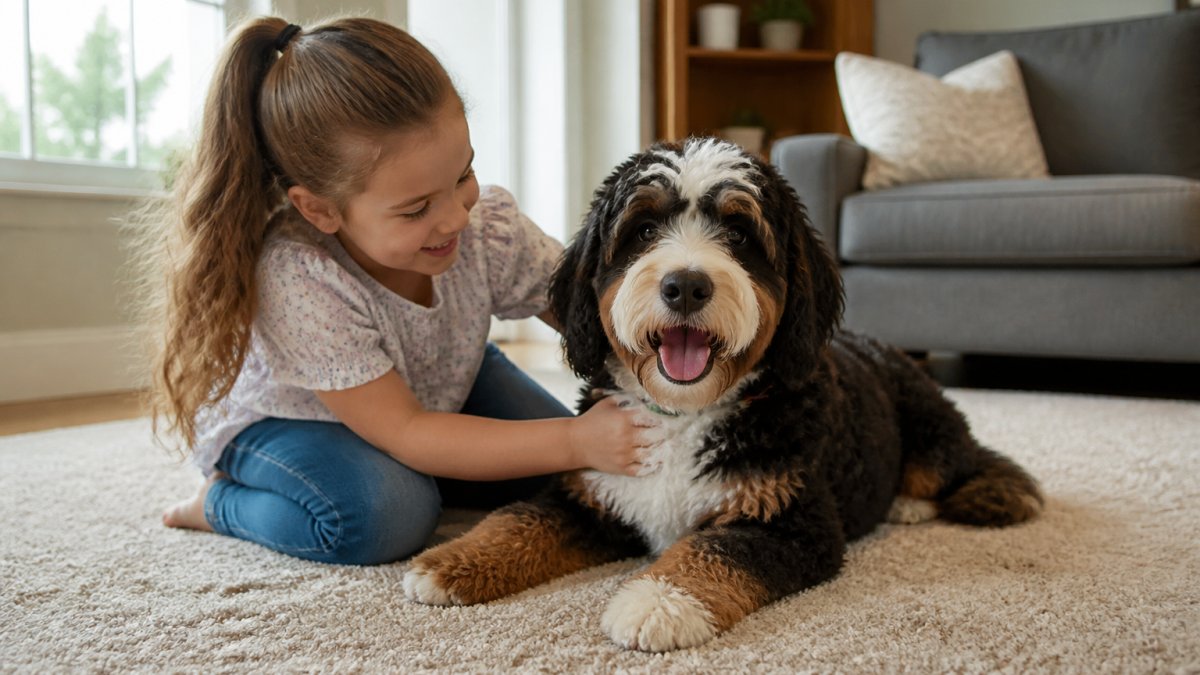
Introduce one new thing at a time. Let visitors offer a treat and speak softly. Take short car rides to pleasant places. Roll a ball across different floor surfaces. Keep each new experience positive and brief. If your puppy seems nervous, back off and try again later. Our Bernedoodle puppies are raised with early handling and training, which gives them a head start on socialization.
Feeding Routines and Nutrition for Your New Puppy
A steady feeding routine is one of the most practical puppy owner tips, it prevents upset stomachs and makes potty training predictable. Feed puppy-formulated food on a set schedule, usually three meals a day until about six months, then two. Keep the same food your breeder used for the first week, then transition slowly if you switch brands.
Vet Care, Vaccinations, and Preventive Health
Schedule a vet checkup within the first few days of bringing your puppy home, ideally within 48 to 72 hours. Bring every record the breeder or shelter gave you: vaccine dates, deworming history, microchip number, and any parent health testing. The first visit is mostly a baseline: weight, temperature, heart and lung check, fecal test for parasites, and a conversation about what comes next.
What to Ask at the First Visit
Come with a short list so you do not forget in the exam room:
Which vaccines does my puppy still need, and on what dates?
What is the right flea, tick, and heartworm prevention for my puppy's weight and our region?
When should we schedule spay or neuter, given breed and size?
Is the microchip registered, and how do I update the contact information?
What signs should make me call rather than wait, vomiting, diarrhea, lethargy, coughing, refusing food?
The Vaccine Series, Roughly
Puppies typically receive a combination vaccine (often called DHPP, distemper, hepatitis, parvovirus, parainfluenza) every three to four weeks starting around six to eight weeks of age, finishing around 16 weeks. Rabies is usually given at 12 to 16 weeks, and some areas require it by a specific age. Your veterinarian sets the exact schedule; the point is that the series is a series, not a single shot, and skipping or delaying doses leaves gaps in protection.
Socialization vs. Disease Exposure: The Real Trade-Off
This is the question first-time owners get wrong in both directions. Waiting until the full vaccine series is done before any socialization misses the window when puppies are most receptive to new experiences, roughly up to about 14 to 16 weeks.
Do invite healthy, vaccinated adult dogs to your home or a private yard.
Do carry your puppy in public, parking lots, outdoor cafes, hardware stores that allow dogs, so it sees and hears the world without paws on the ground.
Do host calm visitors of different ages, wearing hats, carrying umbrellas, and offering treats.
Avoid dog parks, pet-store floors, and areas where unknown dogs congregate until your veterinarian says the series is complete.
Avoid greeting unknown dogs on walks, even friendly-looking ones.
Ask your own veterinarian to weigh in on your local risk, parvovirus risk varies by region and season, and a vet who knows your area is the right person to make the call.
Preventive Care Beyond Vaccines
Set up monthly parasite prevention from the start, and ask about heartworm testing timing. Discuss microchipping if it is not already done, and confirm the registration is in your name, not the breeder's. Ask about dental care, brushing with a dog-safe toothpaste a few times a week from puppyhood saves money and pain later. And ask what the clinic's after-hours and emergency options are before you need them; the first year often includes at least one evening call about diarrhea or a swallowed object.
Skipping early vet visits can delay vaccine protection and let minor issues go unnoticed. Book the first appointment before pickup day so nothing slips through the cracks, and put the vaccine dates on your calendar the same day you get them.
First-Year Costs and Time Commitment: What to Expect
Budgeting and time are the two things new owners underestimate. Most first-year cost guides stop at a list of categories; the useful version breaks those categories into one-time startup costs and recurring monthly costs, then adds the hours the puppy actually takes. The figures below are planning ranges, not quotes.
One-Time Startup Costs
Puppy purchase or adoption fee: $0-$500 from a shelter or rescue (many include spay/neuter and initial vaccines); $800-$3,500+ from a breeder, depending on breed, lineage, and health testing.
Crate and bedding: $60-$200 for a crate sized to adult weight plus washable bedding.
Bowls, leash, collar, ID tag, harness: $40-$120.
Toys and chews (initial stock): $40-$100.
Baby gates and puppy-proofing supplies: $50-$150.
Training treats and treat pouch: $20-$50.
Recurring Monthly Costs
Food: $40-$90 for a medium-breed puppy on a quality puppy formula; large-breed formulas cost more.
Treats and chews: $15-$40.
Vaccine series (months 1-4): roughly $75-$150 per visit across three to four visits, so budget $300-$600 in the first four months.
Flea, tick, and heartworm prevention: $15-$40 per month, varying by weight and product.
Pet insurance (optional): $25-$70 per month for a puppy, higher in states with higher vet costs; accident-only plans cost less, comprehensive plans cost more.
Grooming: $0-$80 per month if you do it yourself; professional grooming every four to eight weeks runs $50-$120 per visit for a medium coated breed.
A realistic first-year total for a puppy can vary widely. Build a cushion for surprises, swallowed socks, ear infections, and giardia are common first-year vet bills.
The Time Commitment, Hour by Hour
Cost is only half the budget. The first month is the most time-intensive: expect to be home or arrange coverage every two to three hours during the day for potty breaks, plus one or two overnight wake-ups. Plan on roughly two to three hours of active supervision, play, and training spread across the day, plus cleanup. Crate training and potty training both depend on someone being there to take the puppy out on schedule, so line up a neighbor, pet sitter, or midday dog walker before pickup day if you work outside the home.
Front-load your spending and your presence in the first three months. The startup costs are one-time, but the routine you build in month one is what keeps recurring costs and behavior problems down for the rest of the year.
Conclusion: Your First Month with a Puppy
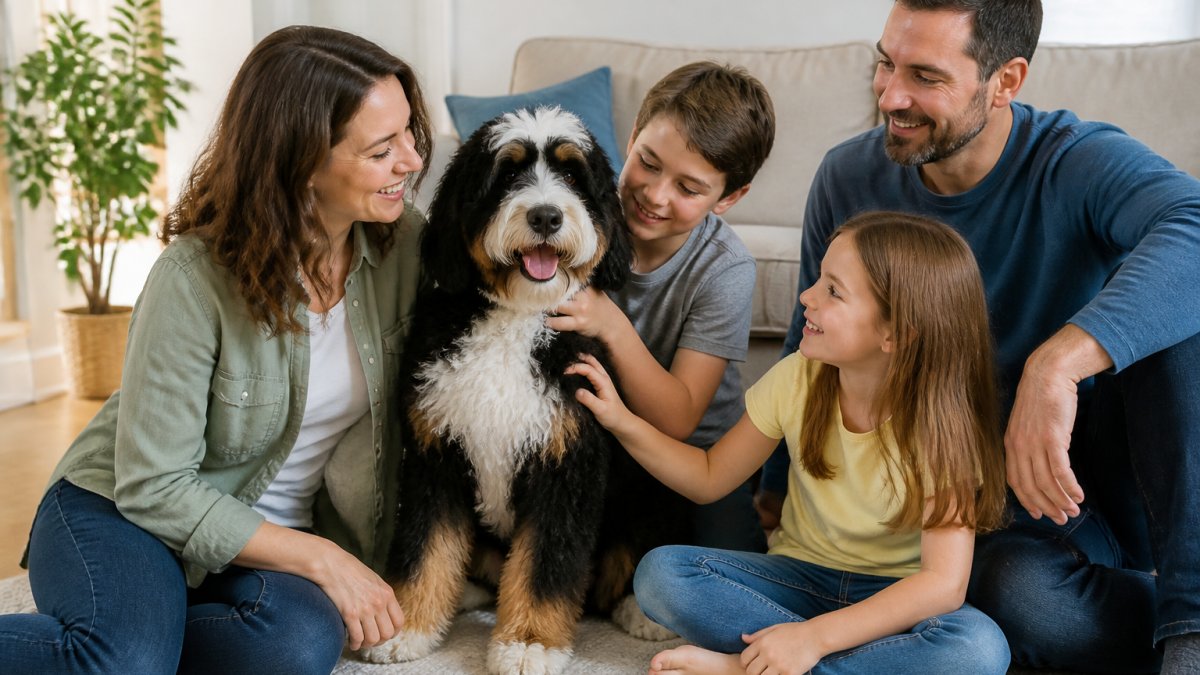
The first month sets the tone for everything that follows. Expect some lost sleep and a few accidents, and know that consistency pays off quickly. If you're searching for a well-socialized, family-friendly companion, JM Kennels raises Bernedoodle and Mini Bernedoodle puppies with early training, DNA-tested parents, and health guarantees for peace of mind. Our puppies come microchipped, vaccinated, and dewormed, and our low-shedding coats suit allergy-sensitive families.
Frequently Asked Questions
What is the 10-10-10 rule for puppies?
The 10-10-10 rule is a guideline for the first three days, three weeks, and three months after bringing a puppy home. For the first three days, give your puppy space to decompress and adjust. For the next three weeks, establish routines and begin basic training. By three months, your puppy should feel fully settled and you can expand socialization and training. This framework helps first-time puppy owners avoid overwhelming their new dog. JM Kennels provides a health guarantee and early training to support a smooth transition.
How do I start potty training a puppy?
Start with a consistent puppy potty training schedule. Take your puppy out every 1-2 hours during the day, and immediately after waking, eating, and playing. Choose a designated potty spot and reward success with praise or a treat. Supervise indoors and watch for signs like sniffing or circling. Crate training can help prevent accidents when you can't watch. Expect accidents, stay patient, and never punish. Most puppies gain full bladder control by 4-6 months. JM Kennels' early training gives puppies a head start on routines.
How long can a puppy be left alone?
A general rule is one hour per month of age, up to four hours for puppies under six months. For example, a three-month-old puppy can handle about three hours. Use a crate or safe pen and provide toys to keep them occupied. Arrange potty breaks or a dog walker if you'll be gone longer. Gradually increase alone time as your puppy matures. JM Kennels' puppies are socialized and microchipped, but they still need gradual alone training to prevent separation anxiety.
When should I start training my puppy?
Begin training as soon as you bring your puppy home, usually at 8-10 weeks. Start with simple cues like sit, come, and name recognition using positive reinforcement. Keep sessions short (5-10 minutes) and fun. Crate training and potty training should start immediately. Socialization is also critical before 16 weeks, but balance it with vaccination guidance from your vet. JM Kennels' puppies receive early training in a nurturing environment, giving you a solid foundation to build on.
Puppy Inquiry

Comments