
How to Potty Train and Crate Train a Bernedoodle Puppy
Last Updated: November 1, 2026
Quick Summary
Bernedoodle puppy training works best with a simple, predictable routine started from day one. Take your puppy outside after waking, eating, and playing, keep sessions to about 5 minutes, and reward good behavior right away. Consistency from everyone in the household makes learning faster.
Take your puppy outside right after waking, eating, and playing.
Keep training sessions to about 5 minutes at a time.
Puppies often need to go outside every one to two hours.
Use the same commands and rules across the whole household.
Clean accidents with an enzyme cleaner and never punish your puppy.
Table of Contents
Bringing home a Bernedoodle puppy is exciting, and it can also feel overwhelming. The good news is that bernedoodle puppy training for beginners does not have to be complicated. The families who do best share one habit: they start with a simple, predictable routine from day one. A routine tells your puppy what to expect, and that makes learning faster.
Puppies learn through repetition. Short, consistent practice beats long, occasional sessions every time. Your routine should cover meals, naps, potty breaks, play, and short training bursts. Keep the rhythm steady, and your puppy will start to anticipate what comes next.
Here is a simple starting routine:
Take your puppy outside right after waking, eating, and playing
Keep training sessions to about 5 minutes at a time
Offer praise or a small treat the moment your puppy does the right thing
Schedule regular naps in a quiet, safe space
Repeat the same cues and words every time
Consistency matters most. Every person in the household should use the same commands and rules. If one person allows jumping and another does not, your puppy will get mixed signals.
Watch out: Puppies have short attention spans. If your puppy seems distracted or tired, stop the session early. Ending on a success teaches more than pushing through frustration.
Bernedoodle Puppy Schedule: Feeding, Naps, and Potty Breaks
Young puppies need frequent meals, plenty of sleep, and many outdoor trips. Most very young puppies need to go outside every one to two hours, plus after every nap, meal, and play session.

A sample daily rhythm looks like this:
Time of Day | Activity | Why It Helps |
Morning | Potty break, meal, short play | Starts the day with a predictable routine |
Mid-morning | Training session, potty break | Builds skills while your puppy is alert |
Midday | Nap in the crate or pen | Prevents overtiredness and nipping |
Afternoon | Potty break, enrichment, play | Burns energy in a calm way |
Evening | Final meal, last potty break, quiet time | Supports nighttime sleep |
Ask your breeder which food your puppy has been eating, and change foods slowly if needed.
Bernedoodle Potty Training Step by Step
Potty training is one of the first skills most owners want to master. The key is supervision and timing. Take your puppy to the same outdoor spot each time, and reward them right after they finish.
Follow these steps:
Take your puppy out first thing in the morning, after naps, after meals, and after play.
Use the same cue word, such as "go potty," while your puppy relieves themselves.
Praise and reward immediately once they finish outside.
Supervise indoors closely so you can catch signs like sniffing or circling.
If you miss an accident, clean it with an enzyme cleaner and do not punish your puppy.
A common mistake is waiting too long between trips. Puppies often need to go more often than owners expect. When in doubt, take them out.
Crate Training a Bernedoodle Puppy So It Feels Safe
A crate can become a safe, cozy den when introduced the right way. Make it a positive place. Place soft bedding inside, toss in a treat, and let your puppy go in and out freely at first. Never use the crate as punishment.
Start with short stays while you are nearby, then gradually build up to longer periods. Feed meals near or in the crate so your puppy links it with good things. If your puppy cries, wait for a brief pause in the noise before letting them out, so they learn that calm behavior leads to release.
How to Stop a Puppy From Biting and Jumping
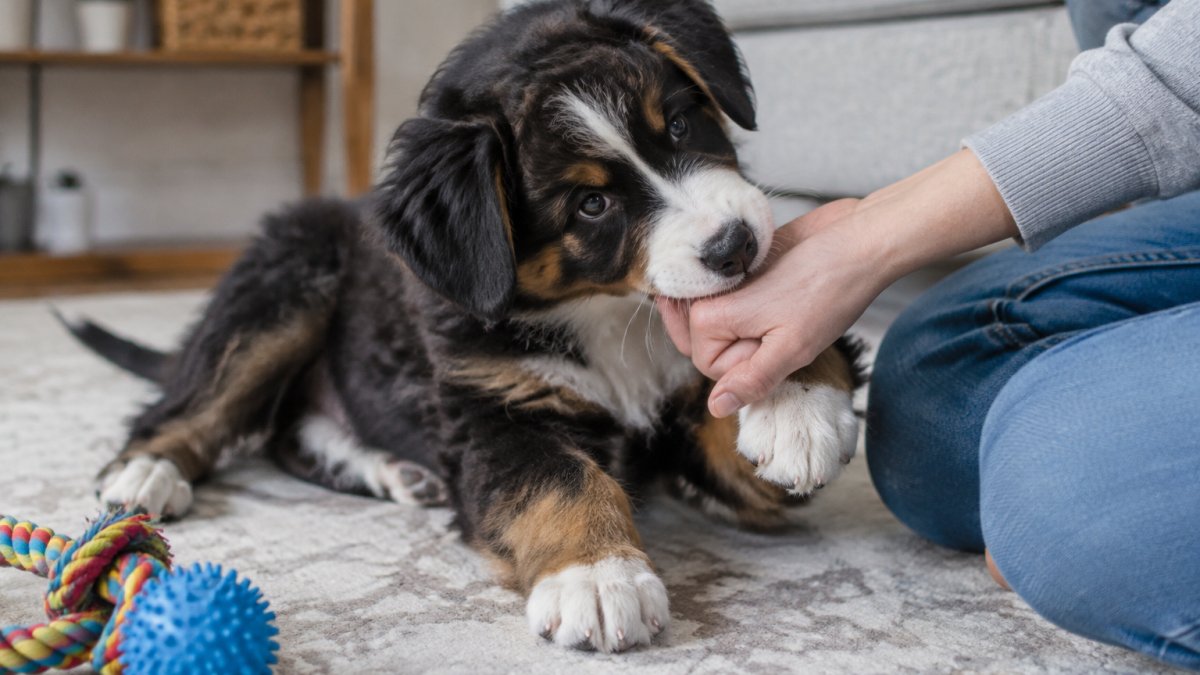
Puppy biting and jumping are normal behaviors, but they need guidance. When your puppy nips, stop playing, calmly withdraw your hand, and offer a chew toy instead. For jumping, keep your greeting calm and turn away until all four paws are on the floor. Then reward them with praise.
Ask guests to follow the same approach. Consistent responses from everyone help your puppy learn faster.
Socialization, Exercise, and Rest for a Growing Puppy
Most beginner guides stop at "socialize your puppy." The useful part is how to do it safely and how much activity a growing Bernedoodle actually needs. This section covers both, because overdoing either one causes problems that look like training failures.
Safe socialization. The prime window for positive exposure is roughly 3 to 16 weeks of age, but safety comes first. Until your puppy is fully vaccinated, avoid high-traffic dog areas and unknown dogs. Instead, invite one calm, vaccinated adult dog to a private yard, host one visitor at a time, and carry your puppy in public rather than setting them on the ground.
Use the "one new thing per day" rule and keep each exposure under a few minutes. Introduce:
People: different ages, hats, uniforms, and walking styles, always paired with treats.
Sounds: vacuum, doorbell, thunder recordings at low volume, gradually increased.
Surfaces: tile, grass, gravel, carpet, and a wobble board or folded blanket.
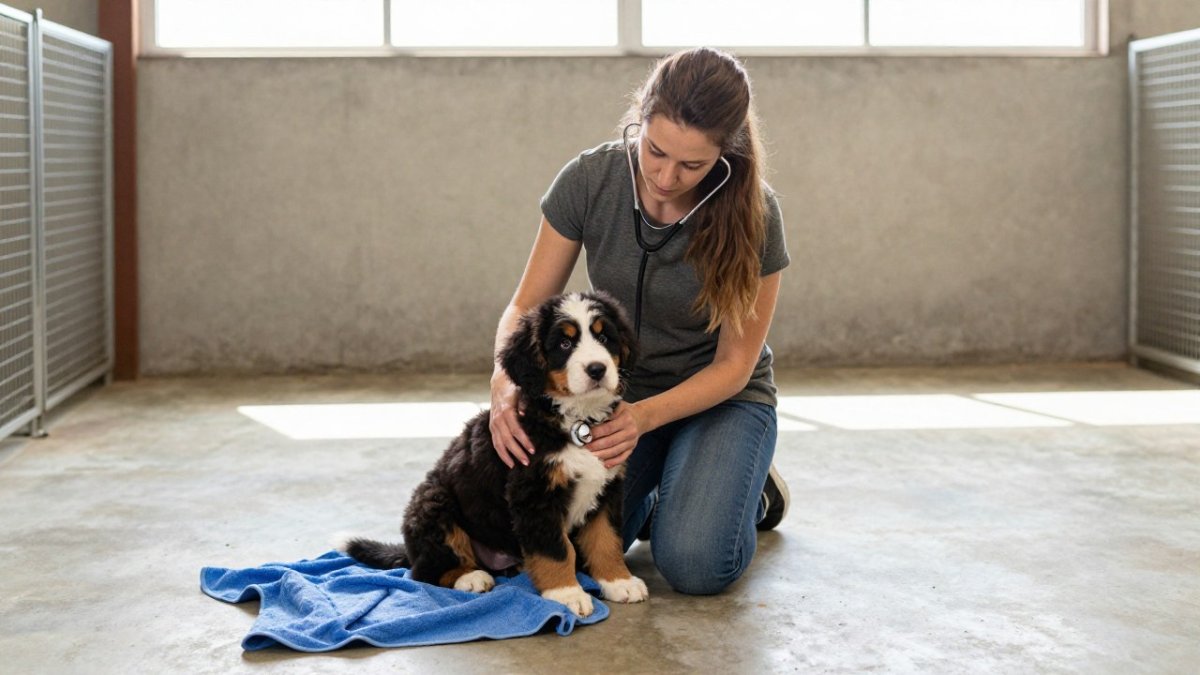
Handling: brief paw, ear, and mouth checks paired with praise.
Watch your puppy's body language. Use the complete checklist for preparing for puppy arrival to plan your first weeks at home. Yawning, lip licking, tucked tail, and freezing mean stop and add distance. A single scary experience can set socialization back, so short and positive beats long and overwhelming.
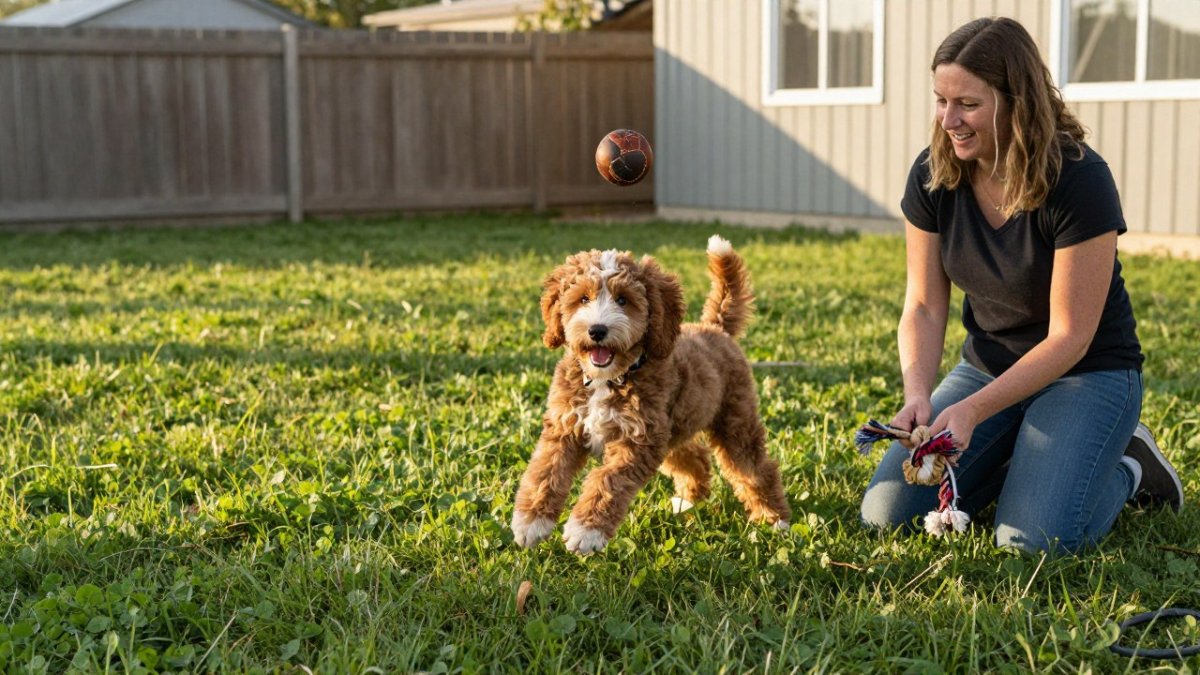
Age-appropriate exercise. A common guideline is roughly 5 minutes of structured exercise per month of age, once or twice a day, up to about 20 to 30 minutes per session. A 3-month-old Bernedoodle needs about 15 minutes; a 5-month-old about 25. Free play in a safe yard, sniffing walks, and puzzle toys count toward activity and are gentler on growing joints than long runs or stairs. Avoid forced running, jumping from heights, and repetitive high-impact play until your puppy is older.
Rest and naps. Puppies need far more sleep than adults, often 16 to 18 hours a day in the early months. Overtired puppies bite more, ignore cues, and melt down. Schedule naps in the crate or pen after every play and training session, and protect that quiet time from visitors and noise.
Week-by-Week Plan and Troubleshooting Common Setbacks
A beginner-friendly plan tells you what to do this week, not someday. The progression below assumes a puppy roughly 8 to 12 weeks old at arrival and adjusts as your puppy grows. Keep every training session to about 5 minutes, two or three times a day, and always end on a success. Consistency remains the most effective tool as you train a new puppy to navigate these early routines with confidence.
Week 1: Routine and trust. Your only goals are potty breaks, crate introduction, name recognition, and handling. Take your puppy out every one to two hours plus after every nap, meal, and play session. Say your puppy's name, then reward the moment they look at you. Practice gentle handling of paws, ears, and collar for a few seconds at a time. Do not add obedience cues yet.
Week 2: First cues and crate comfort. Add sit and come in short, low-distraction sessions. Lure a sit with a treat moved up and back over the nose, mark the moment the rear touches the floor with a word like "yes," then reward. Practice come by crouching, saying the cue once, and rewarding generously when your puppy reaches you. Build crate stays to a few minutes while you stay in the room.
Week 3: Duration and distractions. Extend sit to a few seconds before rewarding, add a stay with one step back, and practice come in a different room. Begin short, calm leash walks in a quiet area. Introduce one new surface, sound, or person per day in brief, positive exposures.
Week 4: Real-world practice. Take short outings to calm, low-traffic places, practice greetings with one calm person at a time, and add distance and duration to known cues. Start leaving your puppy alone in the crate for short periods while you are out of sight, building gradually.
Weeks 5 through 8: Proofing and independence. Alternate cues in new rooms and yards, add mild distractions like a toy on the floor, and keep socialization going with new sights and sounds. Expect regression around teething and fear periods; drop back to easier repetitions rather than pushing through.
Pro Tip Track your plan on a calendar.
Troubleshooting common beginner problems.
Biting: End play the instant teeth touch skin, stand still, and offer a chew toy. Puppies bite more when overtired, so check nap time first.
Chewing: Confine your puppy when unsupervised, rotate a few appropriate chew toys, and redirect immediately when you catch chewing on the wrong item.
Barking in the crate: Wait for a brief pause in noise before opening the door, and make sure your puppy has had a potty break first.
Accidents: Return to the one-to-two-hour potty schedule, clean with an enzyme cleaner, and supervise more closely rather than punishing.
Jumping: Turn away until all four paws are on the floor, then reward calm greetings; ask every guest to do the same.
Regression: Check for teething, illness, a schedule change, or inconsistent rules in the household before assuming training failed.
Watch Out If your puppy shows persistent fear, aggression, or house-training setbacks that do not improve after two weeks of consistent effort, consult a qualified trainer or your veterinarian. Rule out medical causes before changing your training approach.
Your Next Step: Bringing Home a Bernedoodle Puppy From JM Kennels
If you are ready to welcome a puppy into your home, visit the JM Kennels pricing page for current prices and purchase details before reserving. You can also request a puppy inquiry at your convenience.
At JM Kennels, our puppies are microchipped, vaccinated, and dewormed before they go home.
Frequently Asked Questions
How long does it take to potty train a Bernedoodle puppy?
Most Bernedoodle puppies become reliable at house training within several months, though timing varies with age, consistency, and the puppy's temperament. Take the puppy outside after waking, after eating, after play, and about every one to two hours in the early weeks. Reward every successful potty break immediately with a treat and praise. Accidents are normal setbacks; clean them without scolding and go back to a tighter schedule for a few days.
How do you crate train a Bernedoodle puppy?
Introduce the crate as a comfortable den rather than a punishment. Leave the door open, toss treats inside, and let the puppy go in on its own. Gradually add short closed-door periods while you stay nearby, then extend the time. Pair the crate with a chew toy or a snuffle mat, and avoid using it for long stretches during the day. Puppies should never be crated for extended periods, and young puppies need a potty break soon after leaving the crate.
What should you teach a Bernedoodle puppy first?
Start with the basics: name recognition, the sit command, come, and a calm leash walk. Use short sessions of five to ten minutes, several times a day, with high-value treats and praise. Teach the stay command in tiny steps. Add house training and crate comfort alongside these commands, since they are the foundation for everything else. Keep sessions upbeat and end before the puppy loses interest.
How much exercise does a Bernedoodle puppy need?
Young puppies need far less exercise than adult dogs, and too much can strain developing joints. Short play sessions and gentle walks are usually enough, along with plenty of rest. Many trainers suggest keeping structured exercise short and letting the puppy nap frequently, since sleep supports growth and learning. As the puppy matures, daily walks and play can increase gradually. Watch for signs of tiredness such as yawning, lagging, or wanting to lie down, and give a break when they appear. For individualized guidance on your puppy's age and build, ask your veterinarian.
Comments