
Bernedoodle Breeder Health Guarantee Terms: A 2026 Guide
Last Updated: October 23, 2026
Quick Summary
Health guarantee terms are a legal agreement defining which genetic and congenital defects a breeder covers, for how long, and what you must do to claim coverage. They protect you against hereditary diseases like hip dysplasia, elbow dysplasia, and progressive retinal atrophy that may emerge after purchase.
Most responsible breeders include a 72-hour veterinary examination window to catch serious congenital defects immediately after purchase.
A two-year health guarantee is more realistic for large breeds than one year, since hip dysplasia often doesn't show symptoms until 18 months to three years.
Reputable breeders test both parents using OFA certifications, PennHIP evaluations, and DNA testing before breeding.
Your responsibilities, proper diet, exercise restrictions during growth, vaccinations, and immediate notification of health issues, must be met to keep the guarantee valid.
Common exclusions include conditions caused by owner negligence, accidents, infections acquired after purchase, and issues diagnosed after the guarantee period ends.
Table of Contents
What Bernedoodle Health Guarantees Actually Cover
Genetic Conditions and Hereditary Disease Coverage
Understanding Your Bernedoodle Puppy Contract
Bernedoodle Genetic Health Testing: What Reputable Breeders Do
The 72-Hour Veterinary Exam Deadline and Your Rights
Breeder Health Guarantee Exclusions: What's Not Covered
Coverage Duration: One-Year, Two-Year, and Extended Guarantees
Buyer Responsibilities That Protect Your Guarantee
Frequently Asked Questions
What Bernedoodle Health Guarantees Actually Cover
A health guarantee terms document is your legal protection against genetic and congenital defects that emerge after you bring your puppy home. It spells out which conditions the breeder covers, for how long, and what you must do to claim.
At JM Kennels, we stand behind every puppy with a comprehensive health guarantee that covers congenital defects, hereditary diseases, and genetic conditions.
Most breeders offer some health protection, but details vary dramatically. A one-year guarantee may only cover hip dysplasia diagnosed before 18 months, yet hip dysplasia often doesn't show symptoms until age two or three. Know what's covered, what's excluded, and what falls on you as the buyer.
Pro Tip Read the guarantee before you commit to purchasing. Ask the breeder to explain any terms you don't understand. A reputable breeder will welcome questions and provide clear, written answers. If they're vague or defensive about their guarantee terms, that's a red flag.
Genetic Conditions and Hereditary Disease Coverage
Genetic health testing of parent dogs is the foundation of a trustworthy health guarantee. Bernedoodles inherit traits from both Bernese Mountain Dogs and Poodles, and both breeds carry hereditary risks. Testing breeding stock before mating significantly reduces the chance of congenital defects in puppies.
The most common genetic conditions covered by responsible breeders include hip dysplasia, elbow dysplasia, progressive retinal atrophy (PRA), von Willebrand disease, and degenerative myelopathy (DM).
Progressive retinal atrophy leads to vision loss and eventual blindness (Clinical studies on progressive retinal atrophy in 31 dogs). Von Willebrand disease is a bleeding disorder that can be life-threatening if unmanaged (Von Willebrand Disease: Current Status of Diagnosis and Management). Degenerative myelopathy causes progressive spinal cord degeneration and hind-limb paralysis (Diagnosis and management of dogs with degenerative myelopathy).
When you review a breeder's health guarantee terms, look for explicit mention of these conditions. Ask which conditions are included and excluded, and request proof of DNA testing and health screening for both parents: OFA (Orthopedic Foundation for Animals) certifications, PennHIP evaluations, and breed-specific genetic test results.

Key Takeaway A breeder who can show you documented parent health testing is far more likely to honor a meaningful health guarantee. Genetic testing isn't optional, it's the baseline for responsible breeding.
Understanding Your Bernedoodle Puppy Contract
Your purchase agreement is a binding contract defining the health guarantee terms, your rights, and your responsibilities.
A solid puppy contract covers the purchase price, date of birth, microchip number, vaccination and deworming records, the guarantee period, conditions covered, exclusions, the claim process, and what happens if a genetic condition is diagnosed.
Pay close attention to the claim process: does it require a diagnosis from a licensed veterinarian, notification within a specific timeframe, and specific documentation?
Also check whether the guarantee covers replacement, a refund, or veterinary treatment costs. A replacement assumes you'll return an unhealthy puppy and wait for another, not always realistic after you've bonded.
Before signing, ask the breeder to clarify any clause that confuses you. If the breeder refuses to explain terms or pressures you to sign without reading, walk away.
Bernedoodle Genetic Health Testing: What Reputable Breeders Do
Responsible breeders test their breeding dogs for genetic conditions before producing litters. Without parent health testing, a breeder's guarantee is essentially worthless because they have no real assurance the puppy is free from genetic disease.
For Bernedoodles, reputable breeders DNA-test for breed-specific risks. Bernese Mountain Dogs are prone to hip dysplasia, elbow dysplasia, and certain eye conditions; Poodles carry risks for progressive retinal atrophy, von Willebrand disease, and degenerative myelopathy.
DNA testing identifies carriers and affected dogs, and tests for von Willebrand disease, degenerative myelopathy, and progressive retinal atrophy are available and inexpensive.
Ask any breeder for copies of parent health test results. A breeder who hesitates or refuses is a red flag. At JM Kennels, we maintain transparent health records for all breeding dogs and provide documentation to every puppy buyer.
Watch Out Never buy from a breeder who won't provide documented parent health testing. A verbal assurance that "the parents are healthy" is meaningless. You need written, third-party verification from OFA, PennHIP, or genetic testing labs.
The 72-Hour Veterinary Exam Deadline and Your Rights
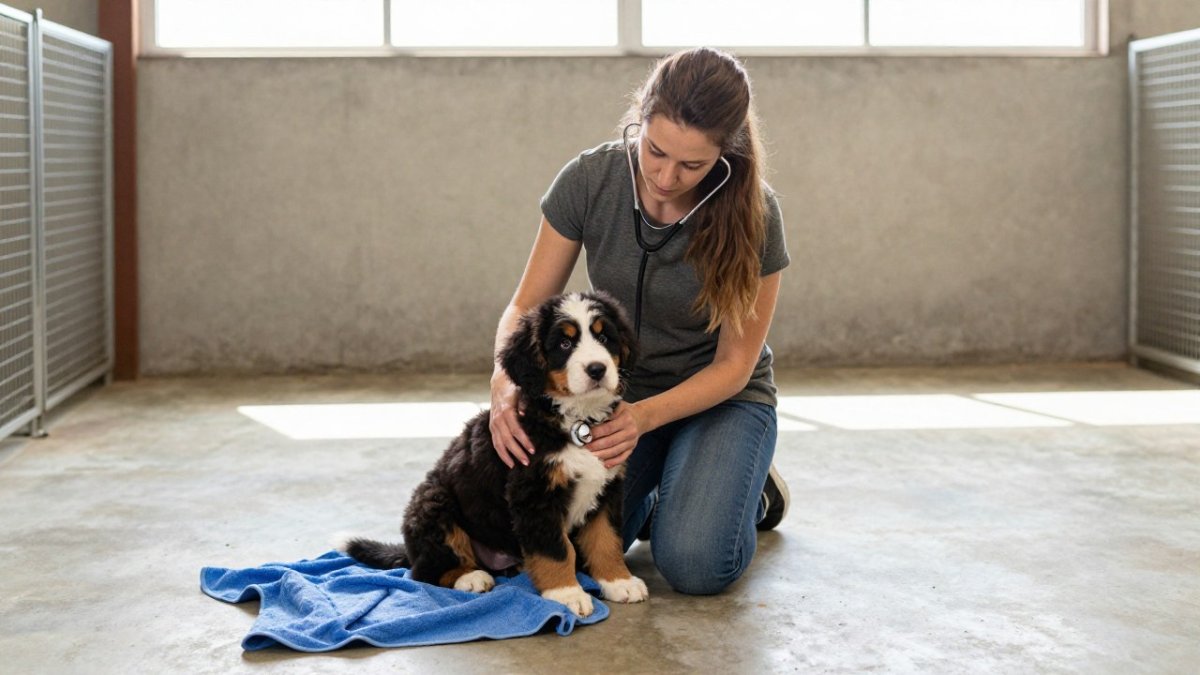
Most responsible breeders include a 72-hour veterinary examination window in their health guarantee terms: three days from purchase to have the puppy checked by a licensed veterinarian. If the vet finds a life-threatening or debilitating condition, the breeder typically offers a replacement puppy or refund.
The 72-hour window catches serious congenital defects, heart murmurs, cleft palates, severe neurological issues, apparent immediately or within days. These should have been caught before the puppy left the breeder's care, and a responsible breeder wants to know if one slipped through.
However, the 72-hour exam is NOT comprehensive genetic screening. Hip dysplasia, elbow dysplasia, eye conditions, and many genetic diseases don't show symptoms in a three-day-old puppy and can't be diagnosed by physical exam alone.
Your responsibility is to schedule that exam within 72 hours and keep the receipt and veterinary report.
Some breeders require that the 72-hour exam be performed by a veterinarian of their choosing or that they be notified before the exam. Read your contract carefully. If the breeder has specific requirements for the 72-hour exam, follow them exactly.
Breeder Health Guarantee Exclusions: What's Not Covered
Every health guarantee has exclusions, conditions the breeder will not cover. Understanding these exclusions is as important as understanding what IS covered.
Many breeders exclude health issues caused by owner negligence. If your puppy develops a life-threatening infection because you skipped vaccination protocols or adequate shelter, that's on you. Accidents, hit by a car, attacked by another dog, aren't genetic defects and won't be covered.
Some breeders exclude conditions appearing after a certain age, say three or four.
Breeders also typically exclude conditions that require ongoing treatment, like diabetes or thyroid disease, if the puppy is otherwise healthy. They might cover a diagnosis but not indefinite treatment costs.
A common point of confusion: some breeders exclude conditions that appear after the guarantee period ends.
Key Takeaway Exclusions exist in every guarantee. The question is whether they're reasonable and clearly stated. A breeder who buries exclusions in fine print or refuses to discuss them is not trustworthy.
Coverage Duration: One-Year, Two-Year, and Extended Guarantees
Health guarantee terms vary in duration. A one-year guarantee covers conditions diagnosed within 12 months of purchase; a two-year guarantee extends that to 24 months.
The challenge: many genetic conditions don't manifest until after the first year.
A two-year guarantee is more realistic for large-breed dogs prone to hip and elbow dysplasia. It gives you time to have the puppy evaluated at a veterinary clinic and potentially diagnosed before the guarantee window closes.
Some breeders offer different coverage periods per condition, a five-year guarantee for hip dysplasia but one year for other issues, acknowledging that hip dysplasia takes longer to diagnose while covering other problems within a typical timeframe.
When comparing breeders, don't just look at the length of the guarantee. Look at which conditions are covered during which periods.
Buyer Responsibilities That Protect Your Guarantee
A health guarantee is a two-way agreement. The breeder commits to standing behind the puppy's health; you commit to providing proper care.
Most breeders require a high-quality diet, often specifying a brand or type.
Exercise restrictions are common for large-breed puppies.
Vaccination and deworming protocols are typically required: keep the puppy on the breeder's recommended schedule and maintain records.
Some breeders require you to return the puppy if a genetic condition is diagnosed rather than pursue your own treatment.
A reputable breeder like JM Kennels will support you throughout the process and work with you to resolve health issues.
When you're evaluating Bernedoodle breeders, the health guarantee terms are one of the clearest windows into their commitment to responsible breeding.
Frequently Asked Questions
What should a Bernedoodle health guarantee cover?
A comprehensive health guarantee covers congenital defects, genetic conditions, and hereditary diseases diagnosed within the coverage period. This typically includes hip dysplasia, elbow dysplasia, eye conditions like progressive retinal atrophy, degenerative myelopathy, and breed-specific genetic diseases. The guarantee should outline whether it provides replacement, refund, or veterinary cost coverage. Reputable breeders clearly define which conditions are covered and the process for filing a claim, including required veterinary documentation and diagnosis timelines.
How long should a Bernedoodle breeder's health guarantee last?
Health guarantees typically range from one year to five years, with two-year and three-year guarantees being common. Longer guarantees provide more protection, especially for conditions that may not appear until a puppy matures. The coverage period usually begins on the date of sale or date of birth, depending on the breeder's terms. Review the specific dates in your purchase agreement, as coverage exclusions may apply after certain milestones or if buyer responsibilities are not met.
What buyer responsibilities can affect my puppy's health guarantee?
Most health guarantees require you to follow specific care guidelines to maintain coverage. Common requirements include providing a required diet, keeping current on vaccinations, obtaining a veterinary examination within 72 hours of purchase, and maintaining regular veterinary care. Some breeders also require genetic health testing of breeding dogs to be verified. Failure to meet these responsibilities may void your guarantee or limit coverage. Always review your purchase agreement to understand exactly what is expected of you.
Does a health guarantee cover genetic conditions in Bernedoodles?
Yes, health guarantees typically cover genetic and congenital conditions, which are often the primary focus of the coverage. This includes hereditary diseases like hip dysplasia, degenerative myelopathy, von Willebrand disease, and eye health issues such as progressive retinal atrophy. However, coverage exclusions may apply if the condition results from improper care, inadequate nutrition, or failure to meet buyer responsibilities. Verify that the guarantee specifically names the genetic conditions covered and understand the claim documentation required, including veterinary diagnosis and records.
What happens if my Bernedoodle develops a health issue within the guarantee period?
If your puppy is diagnosed with a covered health condition, contact your breeder immediately with veterinary records and diagnosis documentation. Most breeders will review your claim and the terms of your purchase agreement to determine eligibility. Remedies typically include replacement with another puppy, a refund of the purchase price, or reimbursement of veterinary costs, depending on the breeder's policy. Document all veterinary examinations and treatments, and follow the claim process outlined in your contract to ensure your rights are protected.
What is the difference between a health guarantee and a veterinary health certificate?
A veterinary health certificate is a one-time examination performed by a licensed veterinarian at or near the time of purchase, confirming the puppy's health status on that date. A health guarantee is a breeder's promise to cover or replace a puppy if certain genetic or congenital conditions develop within a specified period. The 72-hour veterinary exam deadline is often a requirement to validate your health guarantee claim. Both documents are important: the certificate documents the puppy's initial condition, while the guarantee protects you against hereditary diseases that may emerge later.
How can I verify that a breeder's health guarantee is legitimate?
Request the full written terms of the health guarantee before purchase and have an attorney or experienced dog owner review it if needed. Verify that the breeder is licensed and in good standing with local or state pet care regulations. Ask for references from previous buyers and inquire whether the breeder has honored claims in the past. Ensure the guarantee specifies covered conditions, coverage duration, claim procedures, required documentation, buyer responsibilities, and remedies.
Puppy Inquiry
Add bernedoodlesoftherockies.com as a preferred source on Google →
Comments